
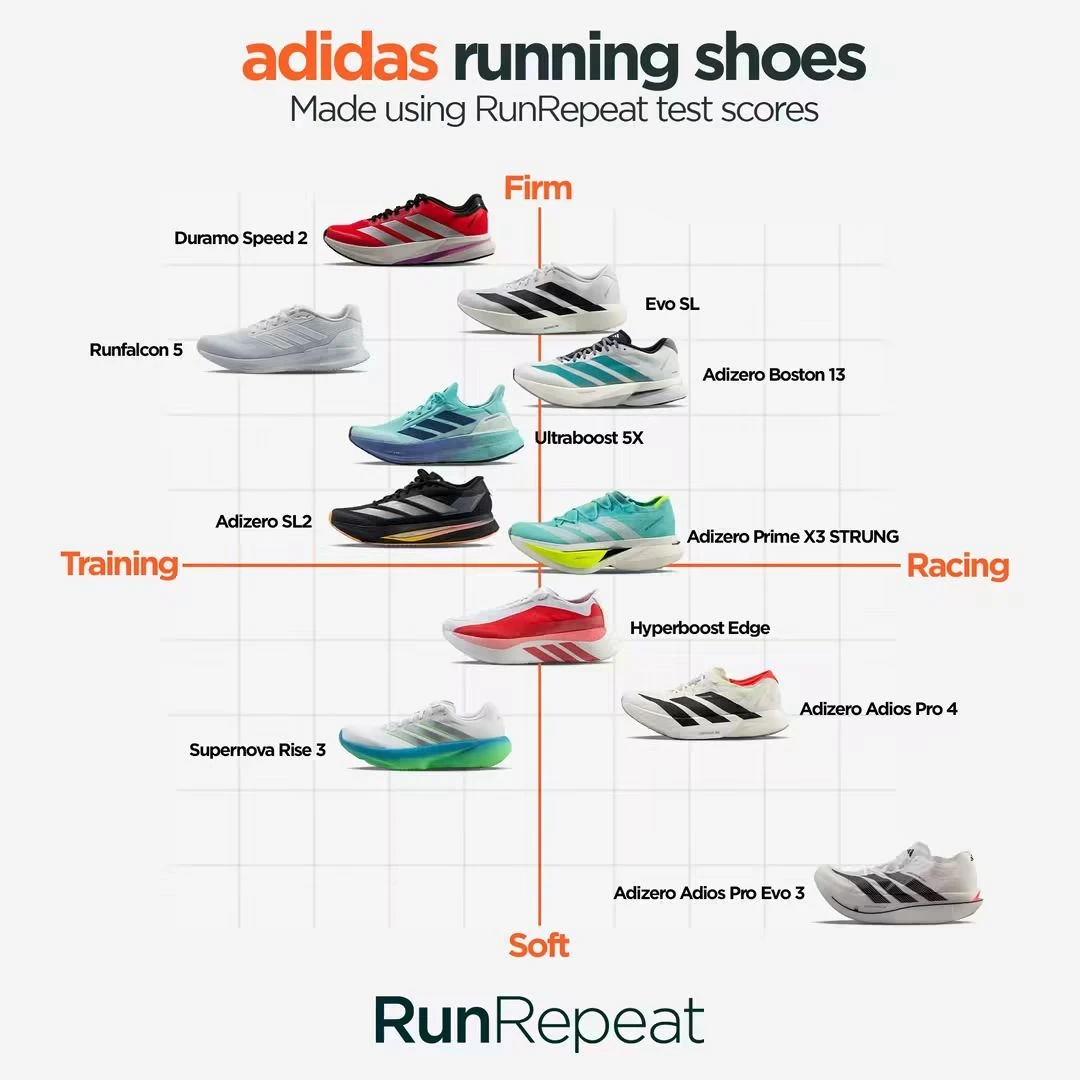
Understanding your Running Shoes
Firm vs Soft, Training vs Racing: Understanding Running Shoes.
Walk into a running shoe shop today and you will hear words like soft, cushioned, responsive, firm, lightweight, trainer, racer, carbon plate and super shoe.
For a runner, it can become confusing very quickly. But underneath all the technology, running shoes are designed around one basic
question: What do you want the shoe to help you do? Do you want to comfortably cover 10–20 kilometres on an ordinary morning? Or do you want to run 21.1 kilometres as fast as your legs will allow? That is where the difference between firm and soft and training and racing becomes important.
Firm vs Soft: What Does It Actually Mean? The softness or firmness of a shoe mainly comes from the midsole foam, geometry and construction. Soft shoes A soft shoe compresses easily when your foot lands. It generally gives the sensation of landing on a cushioned surface. Soft shoes can be particularly comfortable for: Easy runs Long runs Recovery runs Runners who prefer a cushioned ride High-mileage training The sensation can be luxurious, especially when you are running slowly and spending a lot of time on your feet.
However, softer doesn't automatically mean better. An excessively soft shoe can sometimes feel less stable, particularly when cornering, running on uneven terrain or when fatigue causes your mechanics to deteriorate.
Firm shoes: A firmer shoe resists compression more strongly. Instead of feeling like you are sinking into the midsole, you may feel more connected to the ground.
Firm shoes can offer: A more stable platform A more direct road feel Good responsiveness Better control during faster running A sensation that some runners prefer during tempo workouts.
Again, firm doesn't automatically mean fast. A shoe can be firm and uncomfortable, while another can be moderately soft and extremely responsive.
The important distinction is that softness and speed are not the same thing.
Training Shoes vs Racing Shoes
This is where things get even more interesting.
Training shoes: Built for the kilometres A daily trainer is your workhorse. It is designed to handle repeated use and a variety of training sessions. You might use it for an easy 8 km Monday run, a 14 km Wednesday run and a 20 km long run on Sunday.
A training shoe generally prioritises: Comfort + durability + stability + versatility. It doesn't necessarily need to be the lightest shoe in your wardrobe. In fact, a few extra grams may be completely irrelevant during an easy run.
If you are running 60–100 kilometres per week, durability and comfort become extremely important.
Racing shoes: Built for speed A racing shoe has a different mission: Get you from the start line to the finish line as quickly and efficiently as possible.
Modern racing shoes may use: Very lightweight materials Highly responsive foams Carbon-fibre plates Aggressive rocker geometry High-stack midsoles Specialised upper materials The combination can produce a shoe that feels dramatically different from a traditional trainer.
The shoe may encourage a quicker transition from landing to toe-off and can feel particularly lively when you increase your pace. But there is a trade-off.
A shoe designed primarily for racing doesn't necessarily need to be your everyday shoe.
Why Racing Shoes Can Feel Strange at Easy Pace. Here's something many runners discover: A racing shoe can feel incredible at race pace and surprisingly awkward at easy pace. That's because the geometry and foam are often designed to work best when you are moving quickly. At 4:30/km, the shoe may feel like it is coming alive. At 6:30/km, it may feel less natural. This is one reason runners shouldn't choose a shoe simply because it feels fast during a short test. You need to ask: What pace will I actually use it for? The Long Run Is Different Again Long runs occupy an interesting middle ground.
You don't necessarily need a racing shoe, but you also don't necessarily want a heavy traditional trainer. For many runners, a lightweight, well-cushioned training shoe can be an excellent long-run option.
The ideal long-run shoe should provide enough cushioning to protect your legs from repeated impact while remaining stable and responsive enough that your final kilometres don't feel like a battle. And if the long run includes marathon-pace or threshold sections, a more responsive trainer can become particularly useful.
What About Carbon-Plated Shoes? Carbon-plated shoes have changed racing considerably. The plate itself isn't the whole story. The performance characteristics come from the combination of the plate, foam, shoe geometry, weight and rocker.
A carbon-plated shoe can feel extremely efficient at faster paces. But there is an important misconception: Carbon plate does not automatically mean better running. A runner can have a carbon-plated shoe and still run poorly in it if the shoe doesn't match their biomechanics, pace or preferences. Comfort, stability and fit still matter.
So Which Should You Wear?
Think about your running week rather than looking for one shoe to do everything.
Run Typical shoe characteristics
-Recovery- Soft, comfortable, stable.
-Easy run- Cushioned
-daily trainer/ Long run- Cushioned but reasonably responsive.
-Tempo- Firm/responsive lightweight trainer.
-Intervals- Lightweight, responsive shoe.
-Race- Lightweight racing shoe, possibly plated.
-Trail-specific grip and protection
These aren't strict rules. Some modern shoes can successfully cover several categories. The Best Runner May Have More Than One Shoe A useful rotation might look like this: Shoe 1 – Daily trainer Your reliable workhorse for most kilometres. Shoe 2 – Faster trainer Used for tempo runs, intervals and occasionally faster long runs. Shoe 3 – Racing shoe Reserved primarily for races and key sessions.
This approach can also reduce the amount of repetitive stress placed on your feet and legs because different shoes can provide slightly different riding characteristics.
Don't Confuse Comfort With Performance This is probably the biggest lesson. A shoe can be incredibly comfortable but not particularly responsive. Another can feel aggressive and fast but less comfortable. Another may feel firm initially but become surprisingly enjoyable after 10 kilometres. And another may be perfect for one runner and completely wrong for another.
Your running pace, body weight, biomechanics, terrain, mileage, foot shape and personal preference all matter. The Golden Rule Don't ask, "Which shoe is the best?" Ask: "Which shoe is best for this particular run?" Your daily trainer doesn't have to win a race. Your racing shoe doesn't have to survive 1,000 kilometres. Your recovery shoe doesn't have to feel fast. And your fastest shoe doesn't necessarily need to be the shoe you wear every morning.
Running shoes are tools. Choose the tool according to the job. Because ultimately, the best shoe isn't the one with the longest specification sheet. It's the one that helps you run comfortably, efficiently and consistently.